For practices
For the practice that bills for its surgeons.
The surgeon is in the room. Someone still has to turn the list, the ward and the consults into claims the ministry will accept, and then read what the ministry pays. That is the practice. Ubika Billing keeps the preparation, the approval and the payment in one place, under the physicians who are responsible for the claims.
The MOA’s day
Delegation is how the day runs. A physician names who may work in the practice. An MOA prepares inside that grant: the patients from the list, the claims those visits become, the files the ministry sends back. The grant is a role. It is not a shared password, and it is not a second copy of the surgeon’s login. What an MOA can open is what the physician allowed. People join by invitation.
Approval before a claim is sent
A physician approves a claim before it is submitted. The MOA can build it. The agent can build it. Neither of them is the authorization. The policy sits in front of the submit action, so a finished claim can wait without being a file on its way to the ministry. When the physician is ready, the submit page is the authorization itself.
Tick boxes, then send
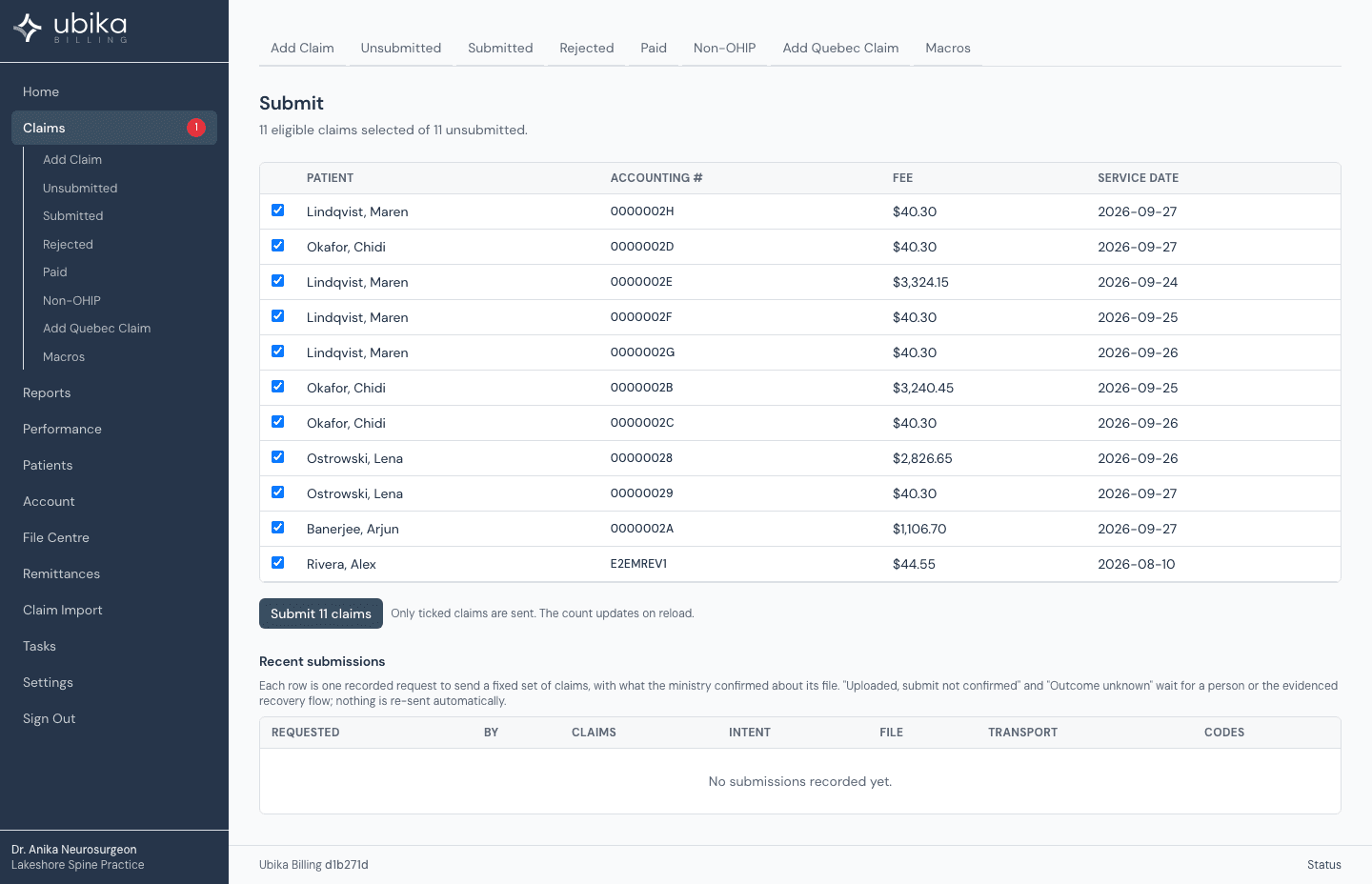
Each unsubmitted claim has a tick box. The button counts only the ticked rows, and the line under it says that only ticked claims are sent. Untick a row and it stays. The count updates from the boxes, not from a batch that left because a file happened to be open. Recent submissions stay on the same page: who sent the file, how many claims were in it, and what the ministry confirmed. A file is one recorded request. If the outcome is unknown, it waits for a person. Nothing is sent twice to find out.
Group numbers, inside the practice
A practice is rarely one billing number. Group numbers are a billing context inside the practice: the same rooms, the same MOA, a different number on the claim when the work was done under the group. You change the context. You do not keep a second login and a second set of files. The history, the macros and the remittances stay with the practice. The number on the claim is the context you chose for that work.
Every physician pays the same capped rate; these are included.
The advice, line by line
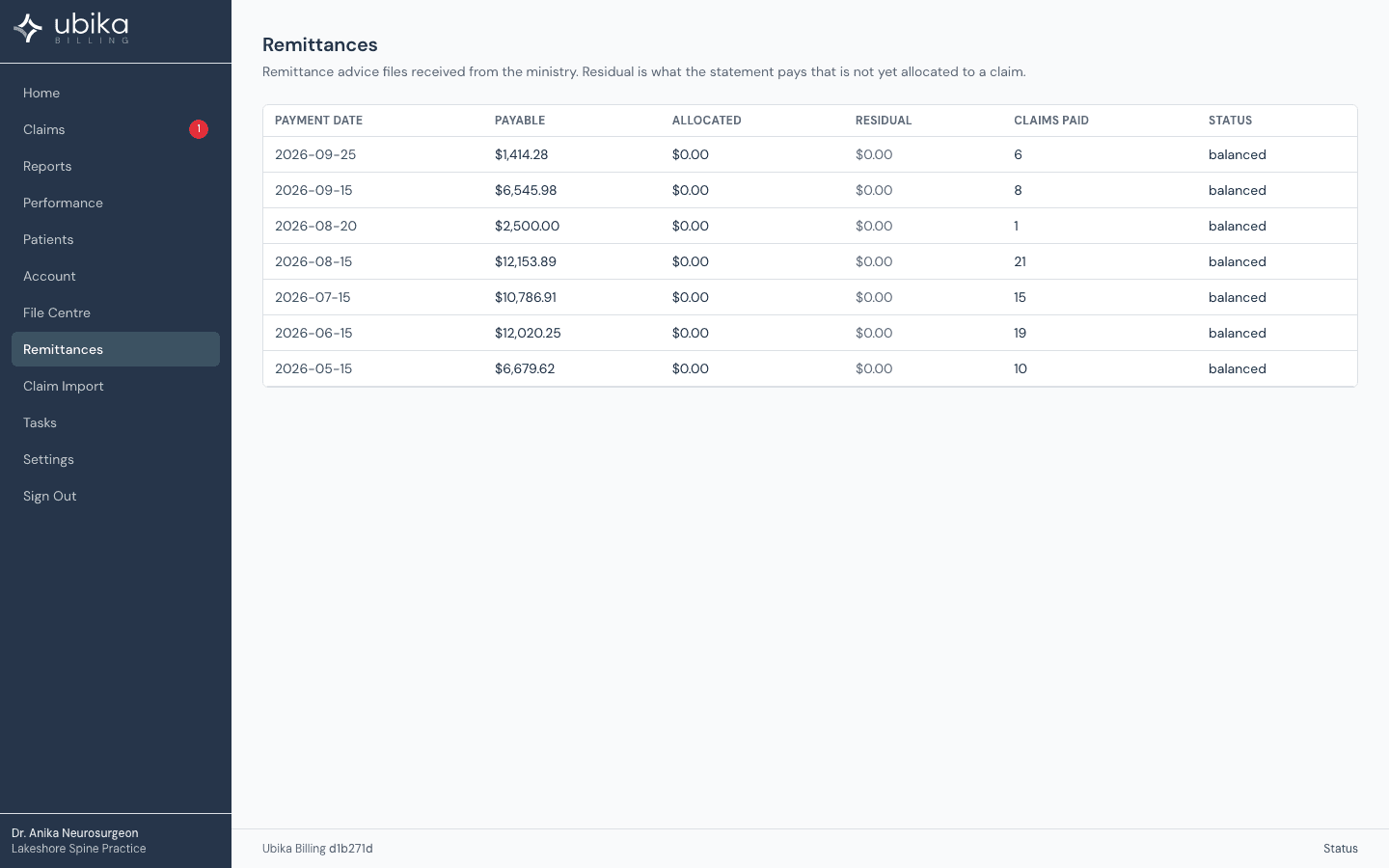
When the ministry pays, the advice is a list of lines, not a single figure to type into a spreadsheet. Each paid, adjusted and reversed line is matched to its claim. The remittance screen shows the payment date, what the statement says is payable, what has been allocated, how many claims were paid, and the residual: money on the statement that is not yet on a claim. A balanced file has nothing left over. Anything unmatched waits in view, instead of disappearing into a month-end adjustment nobody can reconstruct.